Hardscaping in Lakeway, TX: Your Fall Patio & Wall Guide
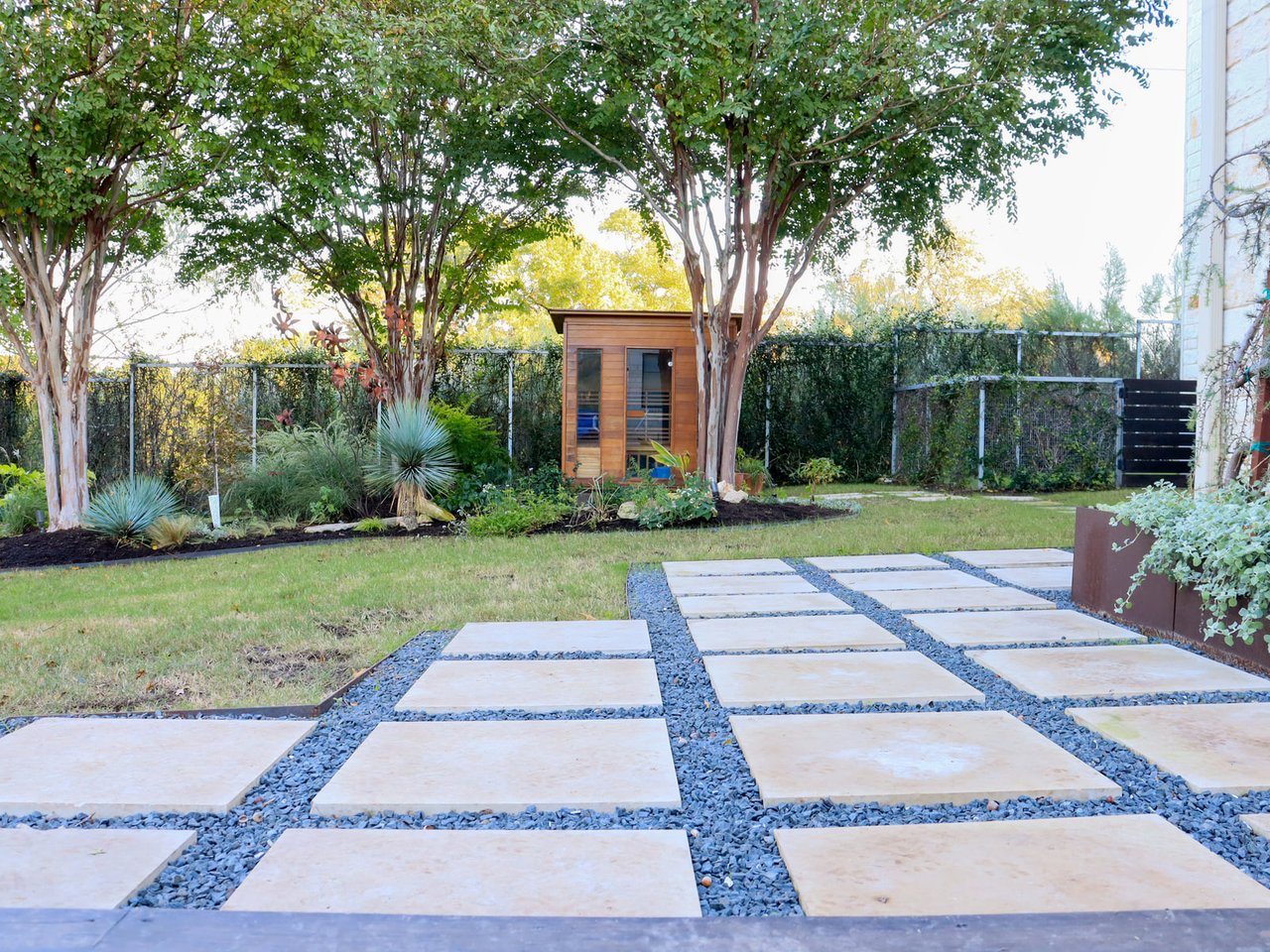
When the Hill Country heat finally breaks, Lakeway homeowners start thinking about their backyards again. That's where Outdoor Renovations comes in. We're a licensed landscape contractor serving Austin Metro and Central Texas, and hardscaping is one of the things we do most — patios, walkways, retaining walls, outdoor kitchens, fire pits, and stone features built to handle everything this region throws at them. With fall weather settling into that sweet spot between 49°F and 92°F, right now is one of the smartest times of year to build.
Hardscaping Guide for Lakeway Homeowners Hardscaping covers the built features in your yard: patios, walkways, retaining walls, fire pits, and outdoor kitchens. In Lakeway, this means working with a mix of expansive clay and limestone bedrock, which affects how a project gets built from the ground up. Fall's mild temperatures make this the easiest season for crews to pour, set, and compact materials correctly. Homeowners should know that proper base prep and drainage planning matter more than the surface material you pick.
Why Fall Is the Right Time to Build in Lakeway
Austin summers can climb past 105°F, and that heat doesn't just make work miserable for crews — it causes real problems with materials. Concrete poured above 95°F can cure too fast, which weakens it and leads to cracking down the road. That's why we avoid pouring concrete once temperatures get that high.
Fall changes everything. With highs topping out in the low 90s and mornings dipping into the 40s and 50s, we get consistent, workable conditions for days in a row. Soil compaction — the process of packing down the base layer under a patio or wall — also goes better when the ground isn't bone dry or flash-flooded. Fall tends to land right in that middle zone.
There's a practical side too. If you want your outdoor kitchen or fire pit ready before the holidays, starting a project in fall gives you a real shot at enjoying it this year instead of waiting through winter. And since Austin's average rainfall sits around 34 inches a year spread unevenly across seasons, fall often brings a calmer stretch before winter's occasional freezes.
Key Takeaway: Fall's mild temperatures protect concrete cure times, improve soil compaction, and give crews more workable days in a row — all of which add up to stronger, longer-lasting hardscaping.
Understanding Lakeway's Soil: Clay, Limestone, and Why It Matters
Lakeway sits in a transition zone. You'll find pockets of expansive black clay, similar to the Houston Black series found in eastern parts of Central Texas, mixed with limestone and caliche bedrock typical of the Hill Country. That combination creates real challenges for hardscaping.
Clay soil swells when it's wet and shrinks when it dries out. That movement is the number one reason patios crack and retaining walls lean over time. If a contractor doesn't dig deep enough or compact the base properly, the ground underneath will keep shifting season after season — and your beautiful new patio will show it within a year or two.
Limestone brings a different issue. It's more stable than clay, but it can sit just a few inches below the surface in parts of Lakeway. That means excavation sometimes requires breaking through rock, which changes both the timeline and the approach for footings on retaining walls or deep posts for pergolas.
In Kyle Stoutenger's experience, the most common failure point in hardscaping isn't the material on top — it's what's underneath. "I've seen beautiful flagstone patios fail within two years because the base wasn't compacted right," Kyle notes from over 16 years of hands-on work across Central Texas properties. "Homeowners blame the stone, but the real problem is always six inches below it."
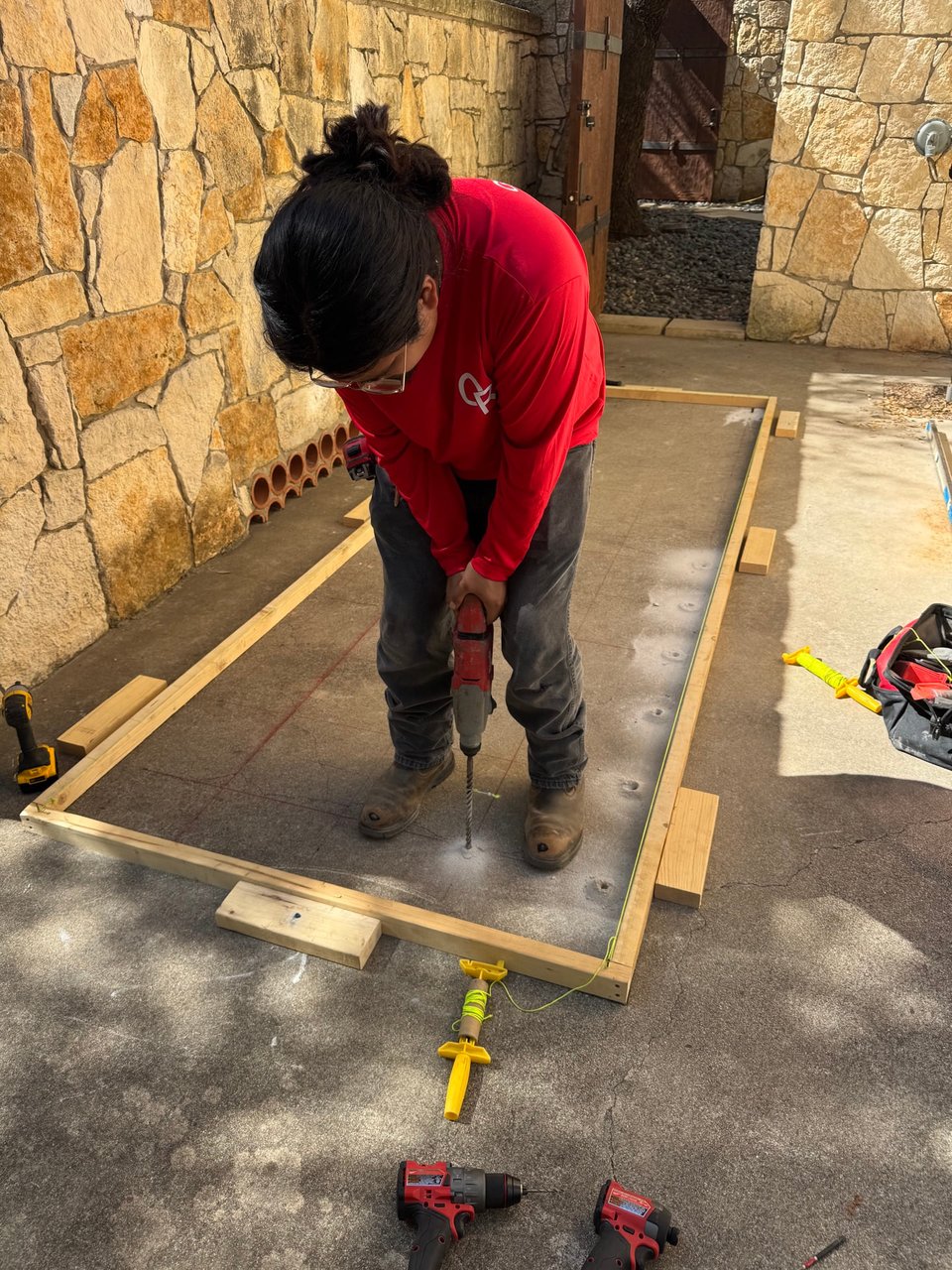
This is why a proper base — usually crushed limestone road base compacted in layers — matters more than which paver or stone you pick. Skipping this step is the single biggest mistake we see from other contractors and DIY projects alike.
Patios, Walkways, and Retaining Walls: Material Trade-Offs
Not all hardscape materials perform the same way in Central Texas conditions. Here's how the common options stack up.
Flagstone vs. Travertine. Flagstone is natural stone with irregular shapes and rich color variation. It holds up well to temperature swings and foot traffic, and it has a rustic look that fits Hill Country homes. Travertine, a type of quarried limestone, offers a cleaner, more uniform surface and stays noticeably cooler underfoot during hot months — a real plus for pool decks and outdoor kitchens. The trade-off is cost and maintenance; travertine often needs sealing to resist staining, while flagstone is more forgiving.
Poured concrete vs. pavers. Poured concrete gives you a seamless surface, but in clay-heavy soil, it's more prone to cracking as the ground shifts. Pavers are individual units set in sand or a compacted base, which means they can flex slightly with ground movement instead of cracking outright. In Lakeway's clay-limestone mix, we often lean toward pavers for long-term durability, especially on larger patios.
Retaining wall materials. Segmental block walls are popular for their cost and ease of installation on smaller slopes. Natural stone walls cost more but blend better into Hill Country landscapes and often last longer when built with proper drainage behind them. For taller walls, engineering review becomes important — height and soil load affect what's required by Travis County and local codes, so it's worth a conversation with your contractor early on.
Key Takeaway: Material choice matters, but it's secondary to proper base prep and drainage. Pavers generally outperform poured concrete in clay soil, and natural stone retaining walls last longer when built with drainage in mind.
Drainage: The Part Homeowners Forget
Here's a misconception we run into all the time: homeowners think hardscaping is just about the surface — the stone, the pavers, the finished look. But water management is just as important, maybe more.
A patio or walkway needs to be graded, meaning it has a slight slope, so rain runs away from your house instead of pooling against the foundation. In expansive clay soil, pooling water is especially dangerous because it accelerates the swelling and shrinking cycle that cracks hardscaping in the first place.
Retaining walls need drainage built in behind them too. Without a way for water to escape — usually gravel backfill and a drain pipe — pressure builds up behind the wall. That hydrostatic pressure is one of the top reasons retaining walls fail and lean forward over time.
If your property already struggles with standing water or runoff, pairing your hardscaping project with our irrigation and drainage services solves the problem at the source instead of working around it. A French drain — a gravel-filled trench with a perforated pipe — is often the fix for persistent wet spots near patios or walls.
Outdoor Kitchens, Fire Pits, and Finishing Touches
Fall is prime fire pit season in Lakeway. With evening temperatures dropping into the comfortable range, homeowners get real use out of a fire feature for months before winter really sets in.
Outdoor kitchens require more planning than most homeowners expect. Gas lines, electrical runs, and proper clearances around grills and countertops all need to be worked out before the first block goes down. We often coordinate with our custom carpentry team for pergolas or shade structures over kitchen areas, and with metal fabrication for custom fire pit rings, grill surrounds, or decorative metal accents.
Lighting ties it all together. A patio or outdoor kitchen that looks great during the day needs a different plan for nighttime use. Our landscape lighting team often works alongside hardscape crews to run conduit before pavers go down, which saves you from cutting into a finished patio later to add lighting.
Key Takeaway: Features like fire pits and outdoor kitchens need upfront planning for utilities and lighting. Coordinating trades during initial construction is far cheaper than retrofitting later.
Common Mistakes We See in DIY and Rushed Hardscaping
A few patterns show up again and again on properties we're called to fix or renovate.
First, skipping a compacted base. It's tempting to save time and money by laying pavers directly on dirt, but this almost guarantees shifting and sinking within a year or two, especially in clay soil.
Second, ignoring slope and grading. Even a beautiful patio becomes a problem if it directs water toward the house instead of away from it.
Third, underestimating retaining wall drainage. A wall without a drain behind it is a wall waiting to fail. We've seen walls built correctly in terms of materials and stacking but doomed from day one because nobody planned for water pressure.
Fourth, mismatching material to use. Smooth polished stone looks great in photos but can turn into a slip hazard around pool decks or outdoor kitchens when wet.
A licensed contractor accounts for all of this before the first shovel goes into the ground. That's the value of experience — not just knowing how to lay stone, but knowing how Central Texas ground behaves underneath it.
Planning Your Lakeway Hardscaping Project This Fall
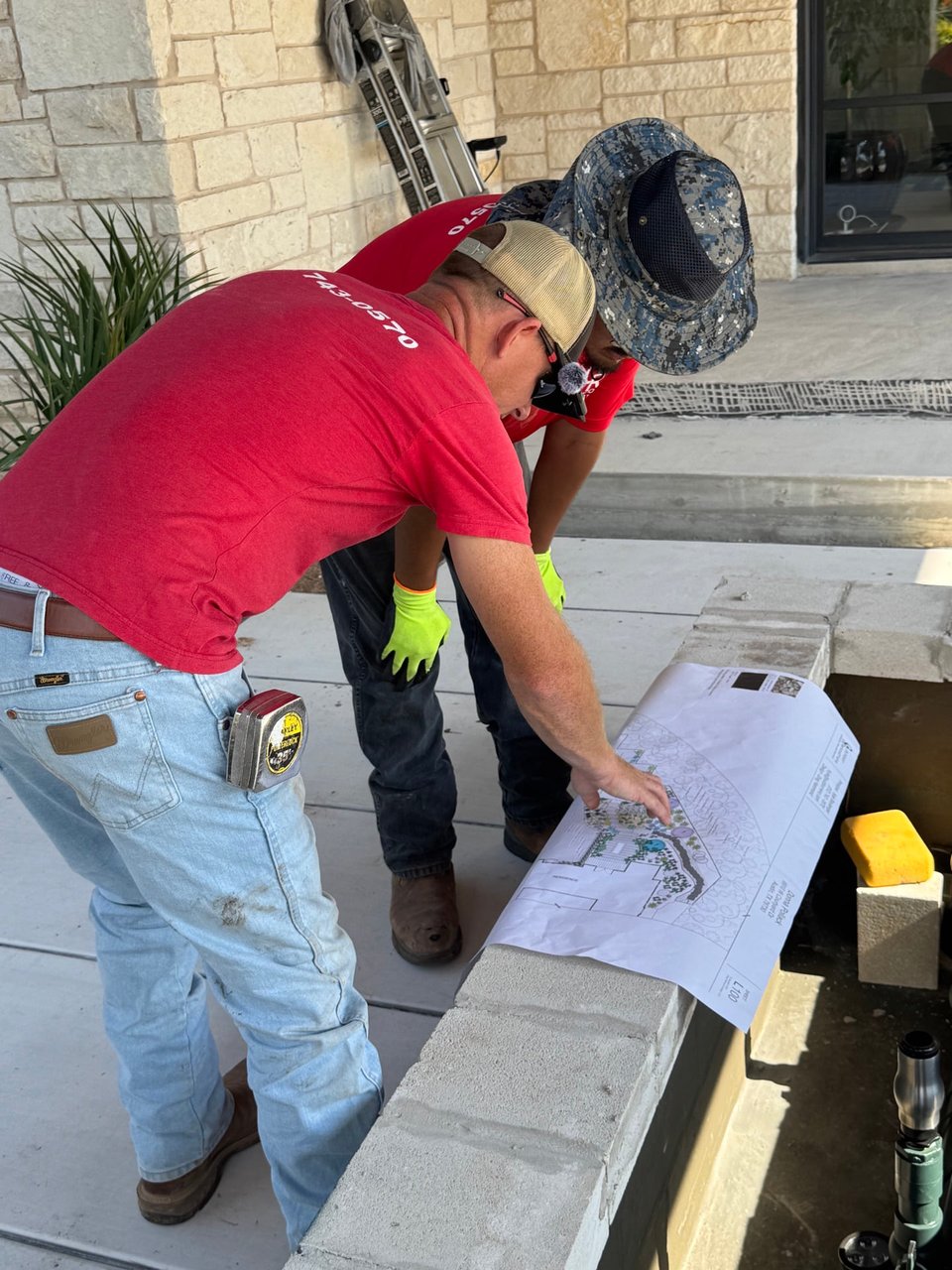
Good hardscaping starts with a plan, not a material catalog. We typically begin with a site visit to check soil conditions, drainage patterns, and tree root zones — Lakeway's mature tree canopy means root systems sometimes factor into where a patio or wall can go.
From there, we talk through material options based on your home's style, budget, and how you'll use the space. If your project is part of a bigger yard renovation, our landscape design team can map out how hardscaping, plantings, and lighting work together as one cohesive plan rather than disconnected pieces.
Quality hardscaping is also a long-term investment. According to the National Association of Landscape Professionals, quality landscaping work can deliver a strong return on investment, and well-built hardscape features tend to hold their value because they're durable and low-maintenance compared to softscape alone. For soil-specific guidance, Texas A&M AgriLife Extension offers research on regional soil behavior that backs up what we see in the field every day.
Key Takeaway: A successful hardscaping project starts with soil and drainage assessment, not material selection. Planning ahead avoids costly fixes down the road and protects your investment.
Fall in Lakeway doesn't last forever, and the contractors who know how to work with clay soil and limestone bedrock get booked up fast this time of year. If you're ready to talk through a patio, retaining wall, outdoor kitchen, or fire pit, give us a call at (512) 743-0570. We're fully bonded and insured, backed by a 1-year service guarantee, and we'd rather talk through your project honestly than oversell you on something your yard doesn't need. You can also reach out through our contact page or browse past work on our portfolio page. Renovating outdoor dreams to reality — that's not just a motto, it's how we approach every property in Lakeway and across Central Texas.
Hardscaping in Lakeway & Central Texas
Landscaping Services Near You
Frequently Asked Questions
Is fall really the best time to install hardscaping in Lakeway?
Fall is one of the best windows for hardscaping in Lakeway. Mild temperatures between the 50s and low 90s make it easier for crews to work full days without the summer heat slowing things down. Soil also holds steady moisture levels in fall, which helps with compaction during base prep for patios and walls.
How does Lakeway's soil affect patio and retaining wall construction?
Lakeway sits on a mix of expansive clay and limestone. Clay shifts as it absorbs and loses moisture, which can crack a poorly prepped patio. Limestone is more stable but can bring hidden rock close to the surface. Both call for proper base excavation and compaction before any pavers or stone go down.
What's the difference between flagstone and travertine for a patio?
Flagstone is a natural stone with texture and color variation, and it handles foot traffic and temperature swings well. Travertine is quarried limestone with a smoother, more uniform look and stays cooler underfoot in summer. The right choice depends on your home's style and how much upkeep you want to do.
Do I need a permit for a retaining wall or outdoor kitchen in Lakeway?
Permit requirements depend on wall height, structure type, and your specific property. Travis County and local municipal codes govern these details, so it's worth a call to your contractor before you dig. A licensed contractor can help confirm what applies to your project.
Can hardscaping help with drainage problems on my property?
Yes, when it's designed right. Patios, walkways, and retaining walls should be graded and paired with proper drainage, like a French drain, to move water away from your foundation. Skipping this step is one of the most common mistakes we see in DIY and poorly planned projects.
How long does a typical patio or retaining wall project take?
Smaller patios or walkways often wrap up in a few days to a week. Larger projects, like outdoor kitchens or tall retaining walls, can take several weeks depending on design complexity, material lead times, and weather. Fall's steady conditions usually help projects stay on schedule.
What maintenance does hardscaping need once it's installed?
Good hardscaping is low maintenance, but not zero maintenance. Joint sand in paver patios may need refreshing over time, and natural stone benefits from occasional sealing. Checking drainage paths each season also helps catch small issues before they become expensive repairs.
Can I add an outdoor kitchen or fire pit to an existing patio?
In many cases, yes. It depends on the existing patio's base, size, and structural layout. A contractor can evaluate whether your current hardscape can support new features or if an extension is the better route.
Need Landscaping Service in Austin?
Contact Outdoor Renovations today for hardscaping services in Austin, TX.