Irrigation & Drainage in Westlake Hills: Summer Survival Guide
Outdoor Renovations has spent years working the limestone ridges and clay-heavy lots of Westlake Hills, and if there's one thing we've learned, it's this: this town's terrain doesn't forgive bad irrigation or drainage planning. Between the steep grades, mature oak canopy, and the mix of caliche rock and expansive clay under your lawn, a system that works in flat Austin suburbs often fails here. This week's forecast of severe thunderstorms and flash flood risk across Travis County is a perfect reminder of why irrigation and drainage planning matters right now, not after the next storm floods your patio.
Irrigation & Drainage Guide for Westlake Hills Homeowners Irrigation and drainage work in Westlake Hills covers smart sprinkler systems, drip irrigation, French drains, channel drains, and grading corrections built for steep Hill Country lots. Summer heat above 95°F stresses lawns fast, while sudden storms can flood low spots in hours. Homeowners need systems that balance water conservation with Austin Water restrictions and fast runoff control for heavy rain. A well-designed setup protects your foundation, your landscaping investment, and your home's value.
Why Westlake Hills Terrain Makes Irrigation Planning Different
Westlake Hills sits on a mix of Austin clay and limestone substrata. That combination creates a strange problem: water either runs off too fast on the rock, or it pools and won't drain on the clay. Sometimes both happen on the same property, just twenty feet apart.
Kyle Stoutenger, who has spent over 16 years working Central Texas soil conditions, puts it simply: "You can't design one irrigation zone for a whole yard here. The soil changes every few feet, and so does the water need." That's why a proper site evaluation matters more in Westlake Hills than almost anywhere else in Austin Metro.
Limestone substrata also means shallow topsoil in many spots. Roots can't go deep, so lawns and beds dry out fast once temperatures climb past 95°F. That shallow soil profile also limits how much water it can absorb before runoff starts, which becomes a major issue during storm season.
Key Takeaway: Westlake Hills properties often need multiple irrigation zones and custom drainage plans because clay and limestone soils behave completely differently within the same yard.
Smart Irrigation: The Summer Water-Saving Fix
Austin summers push past 105°F some years, and this week's forecast of 96°F highs is just the start of the season. Grass and planting beds lose water fast under that kind of heat through evapotranspiration, which is just a technical way of saying plants and soil release moisture into the air faster than normal.
Smart irrigation controllers fix a huge chunk of this problem. These systems check local weather data, soil moisture, and plant type before deciding whether to water at all. According to EPA WaterSense, smart controllers can cut outdoor water use significantly compared to old timer-based systems. We've seen 30 to 50% reductions on Westlake Hills properties after switching from manual clock timers.
This matters even more with Austin Water's Stage 1 through 4 restrictions in place year-round. Smart controllers help you stay compliant automatically instead of guessing which days you're allowed to water.
One common mistake we see from other contractors: installing spray heads everywhere because it's faster and cheaper. In Westlake Hills, drip irrigation often outperforms spray heads for beds and foundation plantings. Drip lines apply water directly to the root zone at a slow, steady precipitation rate that matches clay soil's slow infiltration rate. Spray heads, by contrast, can produce runoff on slopes before the water ever soaks in.
Key Takeaway: Spray heads work fine on flat turf areas, but drip irrigation is usually the smarter choice for sloped beds and foundation plantings in Westlake Hills' clay-heavy soil.
Drainage Solutions for Flash Flood-Prone Properties
This week's severe thunderstorm forecast is exactly the scenario Hill Country drainage systems get tested on. Steep grades common in Westlake Hills mean water moves fast once it starts running. Without proper drainage, that water finds the lowest point on your property, which is often right next to your foundation or under your patio.
French drains are one of the most reliable fixes. A French drain is a trench filled with gravel and a perforated pipe that channels water underground and away from problem areas. They work well for slow, steady groundwater issues.
For surface water during heavy downpours, channel drains (sometimes called trench drains) handle higher volumes faster. These sit flush with driveways, patios, or walkways and catch water before it pools. In Kyle Stoutenger's experience, the most common drainage failure point on Hill Country properties isn't the drain itself. It's undersized pipe diameter that can't keep up with a real Texas gully-washer storm.
Grading is the other half of the equation. Proper grading moves water away from structures using slope alone, before it even reaches a drain. The Texas A&M AgriLife Extension recommends a minimum slope away from foundations to prevent water pooling against the structure, a standard we follow on every drainage project.
Key Takeaway: Flash flood conditions in Hill Country demand drainage systems sized for real storm intensity, not just average rainfall. Undersized pipes are the number one cause of drainage failure we see.
Common Misconceptions About Irrigation & Drainage
A lot of homeowners think more water automatically means a healthier lawn. In reality, overwatering on clay soil just sits on the surface and drowns roots. It also wastes money and breaks Austin Water restrictions.
Another misconception: French drains fix every water problem. They don't. A French drain won't help if the real issue is bad surface grading or a downspout dumping water right next to your foundation. A proper diagnosis matters before any digging starts.
Some homeowners also believe DIY drip irrigation kits from hardware stores work the same as professionally designed systems. The difference comes down to precipitation rate matching, making sure each zone gets water at a rate the soil can actually absorb. Get that wrong, and you either waste water or leave plants thirsty.
Key Takeaway: More water, more drains, and more pipe don't automatically solve problems. The right diagnosis and system design matter more than the size of the fix.
How Irrigation & Drainage Protects Your Landscape Investment
Quality landscaping delivers strong returns, often 100 to 200% ROI according to the National Association of Landscape Professionals. But that return depends on the landscape surviving Central Texas weather swings. A beautiful landscape design or fresh softscaping and planting installation won't last long without proper water management underneath it.
Drainage protects hardscape investments too. Water pooling under a patio or retaining wall can cause settling and cracking over time. If you've invested in hardscaping or a custom structure from our custom carpentry team, proper drainage planning protects that investment for years to come.
Even landscape lighting fixtures and metal fabrication features benefit from good drainage, since standing water and erosion can undermine footings and wiring over time.
Key Takeaway: Irrigation and drainage aren't standalone systems. They're the foundation that protects every other investment you make in your outdoor space.
What a Professional Irrigation & Drainage Assessment Looks Like
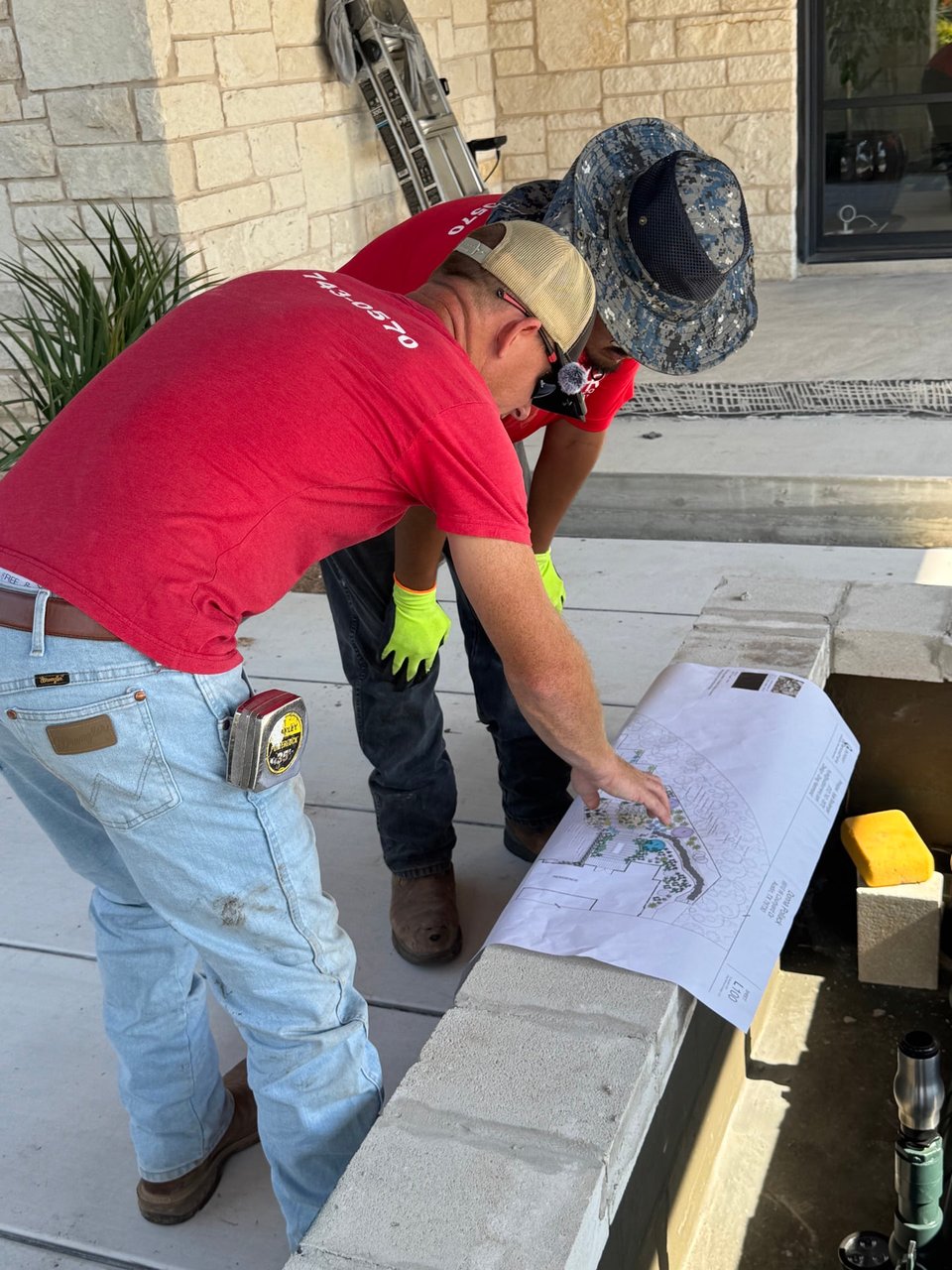
A real assessment starts with walking the property during or right after rain, when you can actually see where water goes. We check soil type at multiple points, since Westlake Hills lots often mix limestone and clay within the same yard.
Next comes a review of existing irrigation zones. We check for mismatched precipitation rates, which happens when a contractor mixes spray heads and rotors on the same zone. That mismatch means some areas get soaked while others stay dry, no matter how long the system runs.
Finally, we map drainage flow paths and identify where grading, French drains, or channel drains make the most sense. This isn't guesswork. It's based on the NOAA National Weather Service rainfall data for our region, which averages around 34 inches a year but often comes in intense bursts rather than steady rain.
Key Takeaway: A proper assessment looks at soil, existing equipment, and real storm data together, not just a quick walk around the yard.
Why Summer Is the Right Time to Fix Irrigation & Drainage
Right now is actually a smart window for this work. Temperatures between 72°F and 96°F this week are manageable for crews, and the mix of rain and heat shows exactly where your system is failing. You can literally watch where water pools during a storm and where your lawn browns out two days later.
Waiting until fall means guessing at problems instead of seeing them play out in real time. Plus, getting irrigation and drainage fixed now means your landscape is protected heading into the next planting window this September through November.
Key Takeaway: Summer storms and heat expose irrigation and drainage weaknesses in real time, making this the best season to diagnose and fix problems before fall planting.
Serving Westlake Hills and the Surrounding Hill Country
Outdoor Renovations has completed over 200 projects across Central Texas with a 5.0-star rating, and irrigation and drainage work is one of our most requested services in Westlake Hills. We're fully bonded and insured, and every project comes with a 1-year service guarantee. We also serve nearby Lakeway, Bee Cave, Dripping Springs, Barton Creek, Rollingwood, Tarrytown, Steiner Ranch, Circle C Ranch, and Travis Heights.
If you want a full picture of what we do beyond irrigation and drainage, check our portfolio or learn more about us and our approach to Design, Landscape, and Maintain.
Don't wait for the next storm to expose a drainage problem or for another 100-degree week to fry your lawn. Call Outdoor Renovations today at (512) 743-0570 to schedule your irrigation and drainage assessment in Westlake Hills. We'll build a system that handles Hill Country's toughest conditions, from flash floods to summer droughts, and protects the investment you've made in your home.
Irrigation & Drainage in Westlake Hills & Central Texas
Landscaping Services Near You
Frequently Asked Questions
How much does an irrigation and drainage system cost in Westlake Hills?
Costs depend on lot size, slope, and soil conditions. Westlake Hills properties often need extra grading work because of limestone substrata and steep terrain, which can affect price. Contact Outdoor Renovations at (512) 743-0570 for a site-specific quote.
Do I need a permit for drainage work in Travis County?
Many drainage projects, especially those that alter grading or discharge near property lines, require permits under local development codes. Outdoor Renovations handles permitting requirements as part of every project scope.
How do smart irrigation controllers save water during Austin's Stage restrictions?
Smart controllers use local weather data and soil moisture readings to water only when needed. This can cut water use by 30 to 50 percent and helps homeowners stay compliant with Austin Water's Stage 1 through 4 restrictions.
What's the difference between a French drain and a channel drain?
A French drain uses a buried perforated pipe surrounded by gravel to move water underground slowly. A channel drain sits on the surface and moves large volumes of water fast, which works better on paved areas or steep driveways common in Westlake Hills.
Can drainage problems damage my foundation?
Yes. Expansive clay soil swells when wet and shrinks when dry. Poor drainage near a foundation can cause this cycle to repeat aggressively, leading to cracks and shifting. Proper grading and drainage prevent this.
How often should I have my irrigation system inspected?
We recommend a full inspection twice a year, ideally before summer heat hits and before winter dormancy. Kyle Stoutenger recommends catching valve leaks and head misalignment early, before they waste water or damage landscaping.
Will heavy summer rain overwhelm my drainage system?
A properly sized system, engineered for local rainfall intensity, should handle typical Central Texas storms. Undersized or clogged systems are the most common failure point during flash flood events on sloped properties.
Need Landscaping Service in Austin?
Contact Outdoor Renovations today for irrigation drainage services in Austin, TX.