Landscape Design in Westlake Hills: A Summer Planning Guide
If you own a home in Westlake Hills, you already know your property isn't like a lot in a new subdivision. You've got mature oak canopy, rock outcroppings, and soil that shifts between hard limestone and sticky clay, sometimes in the same flower bed. At Outdoor Renovations, we've spent years designing landscapes for properties just like yours across Travis County, and landscape design is where every successful project actually starts. Before a single stone gets placed or a plant goes in the ground, a solid design plan decides whether your yard will thrive in August heat or struggle against it.
Landscape Design Guide for Westlake Hills Homeowners Landscape design in Westlake Hills means creating custom 2D plans, 3D renderings, and construction-ready drawings suited to local clay-and-limestone soil and mature tree canopy. Summer heat near 103°F stresses new plantings and existing beds, making this the ideal time to plan ahead for fall installation. A good design accounts for drainage, shade patterns, native plant zones, and water-efficient irrigation layout, protecting your investment through Central Texas extremes.
Why Landscape Design Matters More in Westlake Hills
Westlake Hills sits right where Hill Country limestone meets pockets of Austin's expansive clay. That combination creates real design challenges most cookie-cutter landscapers never deal with. Limestone substrata can sit just below the topsoil, which limits how deep you can dig for footings, planting beds, or drainage lines.
Then there's the clay. Expansive clay soil swells when it's wet and shrinks hard when it's dry. That movement is one of the top reasons patios crack and retaining walls lean over time. A design that doesn't account for this movement is a design that fails within a few years, no matter how nice the materials look on day one.
In Kyle Stoutenger's experience, the most common failure point in Central Texas landscape design isn't the plant choice or the paver pattern. It's skipping the grading and drainage plan before anything else gets designed. Water has to go somewhere. If the design doesn't tell it where, it picks its own path, usually straight toward your foundation.
Key Takeaway: Westlake Hills properties need designs built around local soil realities, not generic templates. Limestone limits dig depth, and clay soil movement can crack hardscaping if drainage isn't planned first.
What Goes Into a Real Landscape Design
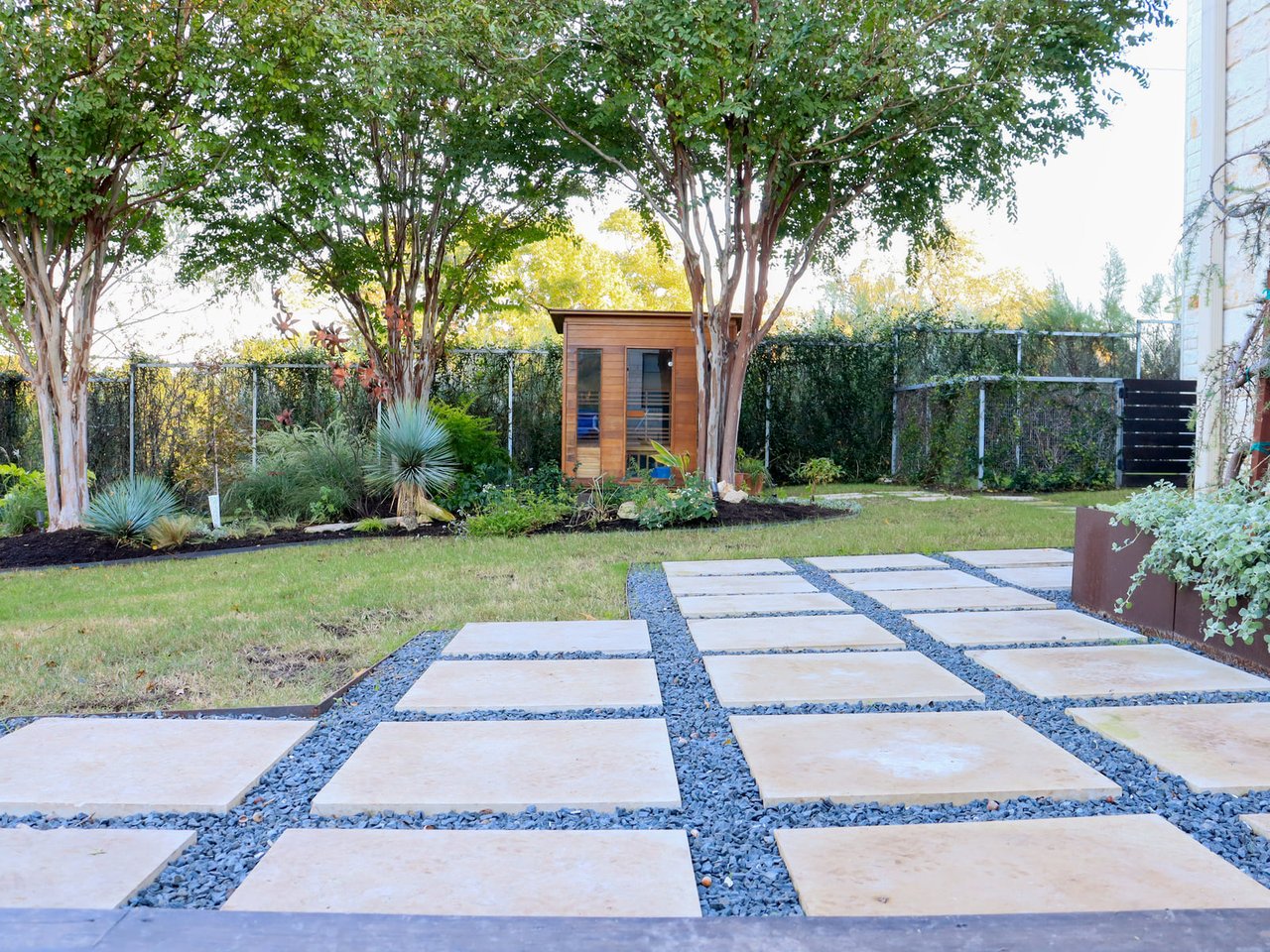
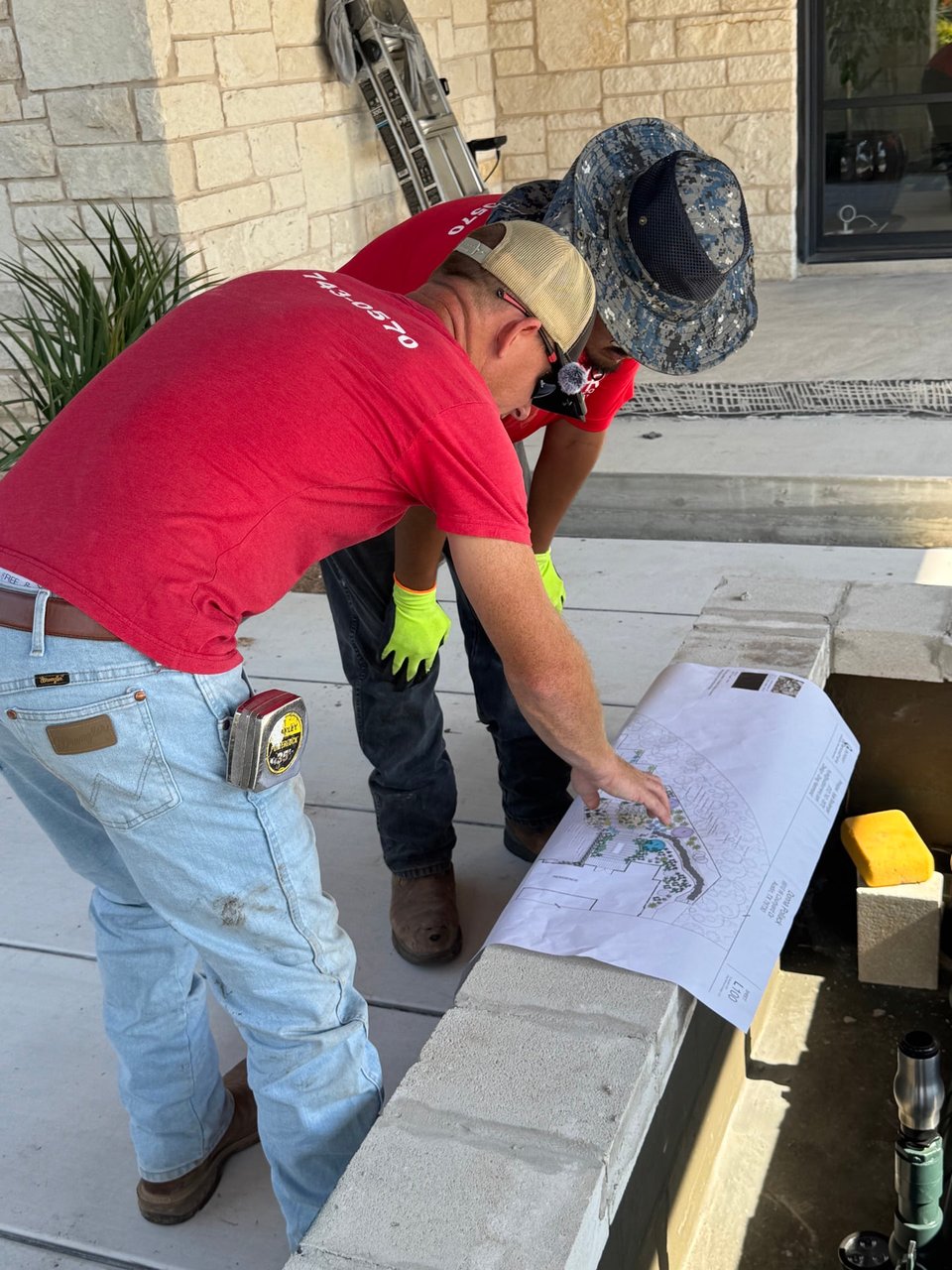
A proper landscape design isn't a sketch on a napkin. Our process includes custom to-scale 2D plans, full 3D renderings, and construction-ready documentation your installation crew can actually build from. Here's what that looks like in practice.
Site analysis first. We walk the property, check drainage flow, map existing trees, and note sun exposure through the day. In Westlake Hills, this often means working around mature live oaks and cedar elms that shade half the yard by afternoon.
Soil and grade mapping. We identify where clay pockets sit versus limestone shelf, since this affects everything from planting depth to where a retaining wall needs engineered footings.
Zoning by water need. Plants get grouped by how much water they need, not just how they look together. This is called hydrozoning, and it's the backbone of efficient irrigation design.
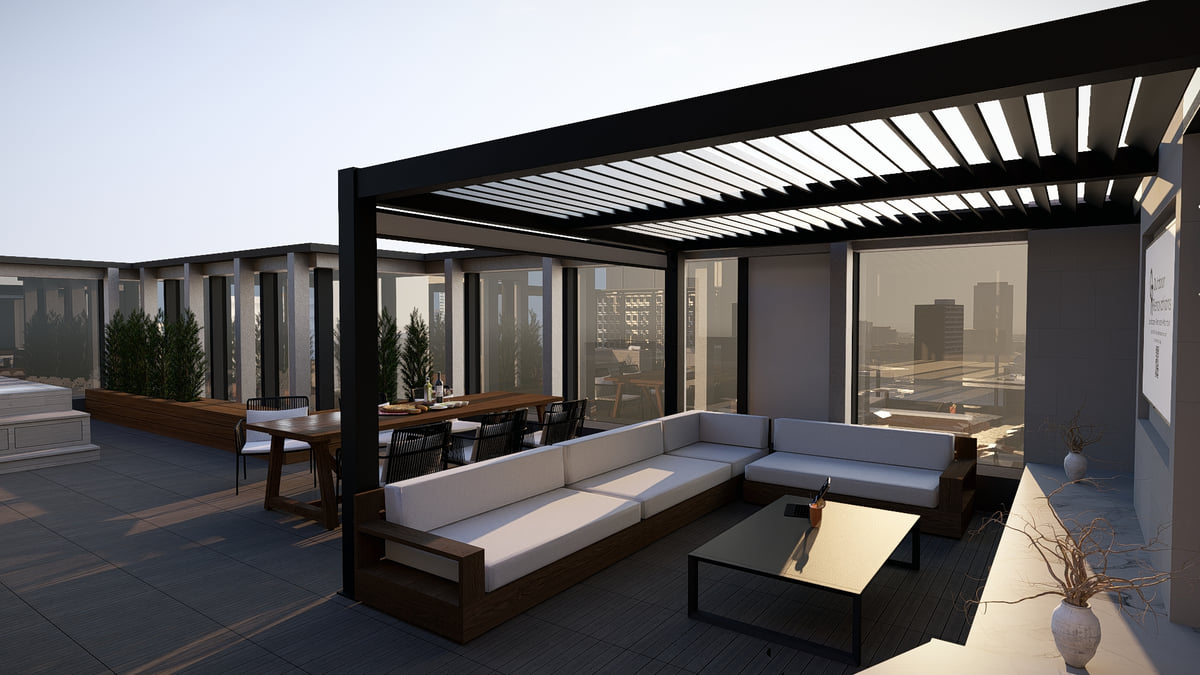
3D renderings. You get to see the finished look before we break ground. This catches design issues early, when they're a five-minute fix on screen instead of a costly change order mid-project.
One mistake we see often from DIY plans and even some competitors: designing the "pretty" layer first, like plant color and patio shape, before solving drainage and grading. That's backward. Water management has to come first, or the prettiest design in the world won't survive its first heavy rain or its first 100-degree week.
Key Takeaway: A complete landscape design includes site analysis, soil mapping, water-need zoning, and 3D renderings, in that order. Skipping drainage planning to focus on aesthetics is a common and costly mistake.
Designing for Central Texas Summer Heat
This week's forecast has highs near 103°F across the Austin Metro area, with lows only dropping to around 77°F overnight. That kind of heat doesn't just stress your lawn. It stress-tests your entire landscape design.
Here's the science behind it, in plain terms. Plants lose water through their leaves faster than their roots can pull it back in when soil temperatures spike. Shallow-rooted plants suffer first. That's why a good design leans on native and adapted species with deep root systems that can chase moisture further down, even in compacted clay or thin limestone soil.
Native options like Texas sage, flame acanthus, Lindheimer muhly, and Mexican feathergrass handle Central Texas summers because they evolved for exactly this climate. Cedar elm and live oak, already common across Westlake Hills, provide the shade canopy that lowers ground temperature and cuts water loss for everything planted beneath them. The Lady Bird Johnson Wildflower Center is a great resource if you want to dig deeper into native plant selection for this region.
Design also has to plan for irrigation efficiency, not just plant choice. Smart irrigation controllers can reduce water use significantly compared to older timer-based systems, since they adjust watering based on real weather data instead of a fixed schedule. That matters even more with Austin Water's mandatory year-round Stage 1–4 water restrictions, which limit watering days and times regardless of how hot it gets. A design that maps irrigation zones correctly from the start makes compliance easy instead of a constant headache.
If your current system is fighting the heat this week, it's worth checking your controller settings and drip zones now rather than waiting. Our irrigation & drainage services in Westlake Hills team can inspect existing systems for coverage gaps before they cause real plant loss.
Key Takeaway: Summer heat above 100°F exposes weak points in plant selection and irrigation design fast. Native, deep-rooted plants and smart-zoned irrigation are the two biggest defenses against Central Texas summer stress.
Why Summer Is the Right Time to Plan (Even If You Don't Plant Yet)
Here's something a lot of homeowners get wrong: they think landscape design has to wait until it's "planting season." Actually, summer is one of the smartest times to design, even though we generally pause new plant installation until temperatures ease.
Why? Because summer shows you the truth about your property. You can see exactly which parts of the yard bake in full sun by 2 p.m., where the grass struggles first, and where drainage backs up after a quick storm. That real-world information makes for a far better design than guessing during a mild spring week.
Central Texas has two main planting windows, March through May and September through November. If we design now, your project is construction-ready right as the fall window opens. That's the ideal handoff, and it avoids the rush that happens when everyone tries to book installation crews at the same time in September.
Hardscape design and even some hardscape installation can continue through summer too. The one rule we follow strictly: we avoid pouring concrete when temperatures climb above 95°F, since it cures too fast and unevenly in extreme heat, weakening the slab long-term. Design and planning work, though, isn't weather-dependent at all.
Key Takeaway: Summer heat is the best stress-test for your landscape design, revealing sun exposure and drainage issues you can't see in milder months. Planning now sets you up for a smooth fall installation.
Common Design Mistakes We See in Hill Country Properties
After years working properties across Westlake Hills, Barton Creek, and the greater Hill Country, a few mistakes show up again and again.
Ignoring root zones near mature trees. Digging or compacting soil too close to an established oak can stress or kill it over a few seasons. A design has to map root protection zones before any hardscape gets placed nearby.
Choosing spray irrigation where drip makes more sense. Spray heads work fine for open lawn areas, but they waste water on planting beds through overspray and evaporation, especially in July heat. Drip irrigation delivers water straight to the root zone, which outperforms spray in beds, slopes, and anywhere water runoff is a concern.
Picking flagstone without checking the base prep. Flagstone looks beautiful, but if it's set without a properly compacted base and adequate joint spacing, clay soil movement underneath will heave and crack it within a couple of years. Travertine, by comparison, is often better suited to consistent, engineered patio applications, though it comes at a higher material cost. The right choice depends on your budget, your soil, and how the space gets used. This is exactly the kind of trade-off we walk through during the design phase, before you're committed to a material that fights your soil conditions.
Underestimating limestone depth. Some homeowners plan a retaining wall or raised bed assuming standard dig depth, only to hit solid limestone shelf a foot down. This changes footing design and cost, so it needs to be part of the design conversation early, not discovered mid-construction.
Key Takeaway: The biggest design mistakes in Hill Country properties involve tree root zones, wrong irrigation type for the application, and underestimating how shallow limestone can sit below the surface.
How Design Connects to Every Other Part of Your Landscape
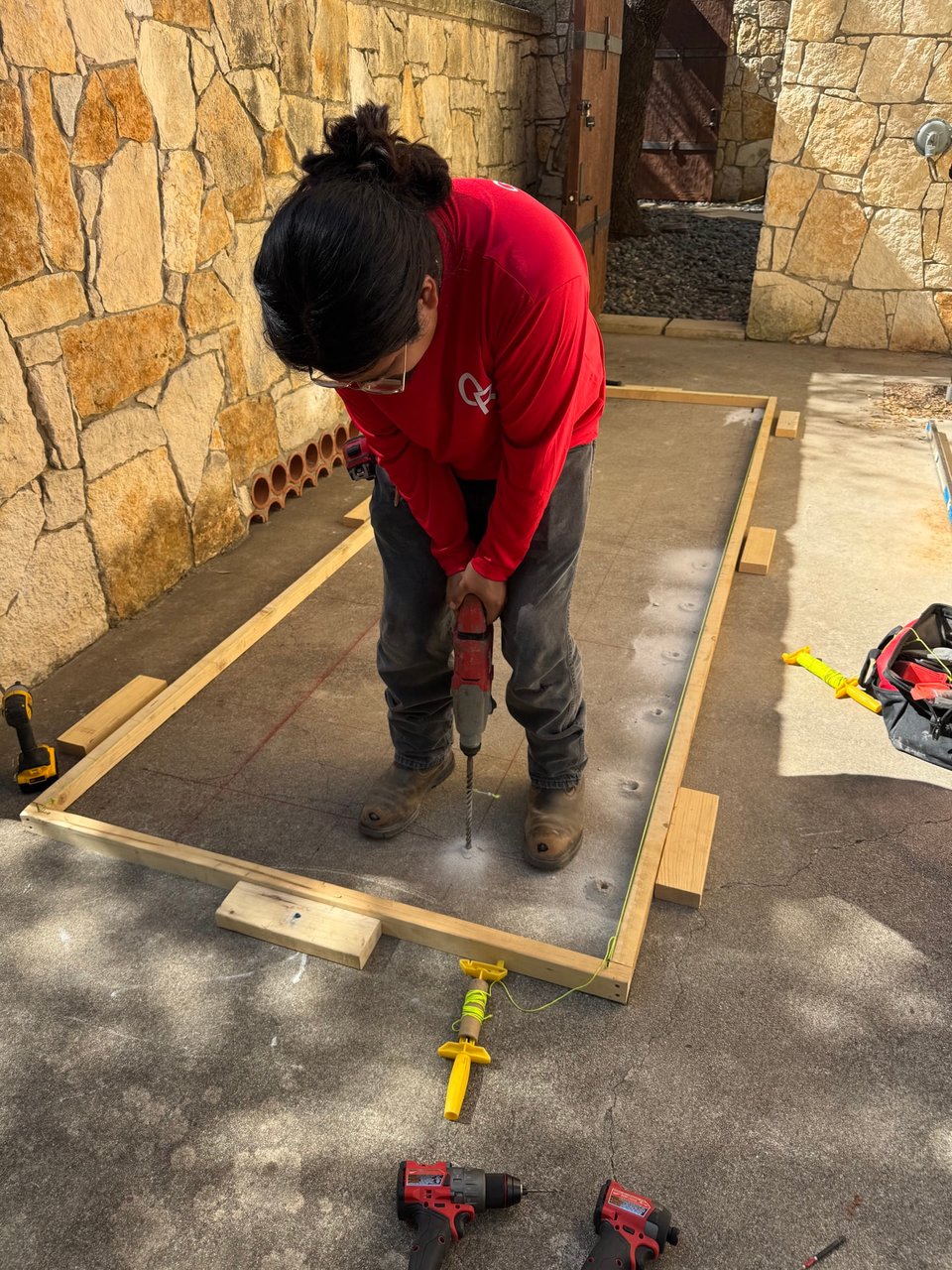
A landscape design isn't a standalone document. It's the blueprint that every other trade follows. Our hardscaping team in Westlake Hills builds from these plans for patios, walls, and walkways. Our softscaping and planting crew uses the plant zoning map to place natives and adapted species where they'll actually thrive.
Design also shapes where we run landscape lighting for evening use, where custom carpentry elements like pergolas or decks go for shade and structure, and even where metal fabrication features like custom gates or fire pits fit into the overall flow. Once your landscape is built, our property and pest management services keep it healthy season after season.
This is why we treat design as its own dedicated phase rather than an afterthought bundled into installation. Quality landscaping, planned and built correctly, can deliver a strong return on investment over time, according to industry data from the National Association of Landscape Professionals. But that return depends entirely on getting the design right first. A beautiful yard that fights its own drainage or soil conditions isn't an asset. It's a maintenance problem waiting to happen.
For technical guidance on regional soil and water conservation practices, Texas A&M AgriLife Extension offers solid research-backed resources worth reviewing if you want to understand your property's growing conditions in more depth.
Key Takeaway: Landscape design is the foundation every other service builds on, from hardscaping and lighting to planting and long-term maintenance. Getting the design phase right protects your entire investment.
Ready to Plan Your Westlake Hills Landscape?
Kyle Stoutenger has spent more than 16 years working Central Texas soil, and that experience shapes every design we draw up, especially for tricky Hill Country lots like the ones common throughout Westlake Hills. Whether you're dealing with mature oak canopy, a clay-heavy backyard, or a slope that never drains right, we've likely solved a similar problem nearby. Explore our landscape design services or check out our Westlake Hills landscaping page to see how we approach properties in your specific area. You can also learn more about our team and our approach to every project we take on.
This summer's heat is a good reminder that landscape decisions matter. A design done right now sets you up for a strong fall planting season and a yard that handles whatever next July throws at it. Give us a call at (512) 743-0570 or reach out through our contact page to schedule a design consultation. We're fully bonded and insured, backed by a 1-year service guarantee, and we'd love to help turn your outdoor space into what you actually pictured when you bought the house.
Landscape Design in Westlake Hills & Central Texas
Landscaping Services Near You
Frequently Asked Questions
Why should I plan landscape design in summer if I can't install until fall?
Summer is actually the best time to plan. You can watch how sun, shade, and drainage behave during the hardest months of the year. This helps us design a landscape that holds up when it matters most. By the time the fall planting window opens in September, your plans are ready to go.
How does Westlake Hills' soil affect my landscape design?
Westlake Hills sits on a mix of Austin clay and limestone. Clay expands and shrinks with moisture changes, which can crack patios and stress plant roots. Limestone can sit just a few inches below the surface, which limits digging depth and affects how we plan planting beds, drainage, and foundation work.
Will a landscape design help me use less water?
Yes. A good design groups plants by water needs, uses drought-tolerant natives, and lays out irrigation zones efficiently. Smart controllers paired with a solid design plan can cut water use significantly compared to older, unplanned systems.
Do I need a permit for landscape design work in Travis County?
Some hardscape and drainage work may require permits through Travis County or the City of Austin, depending on scope and location. We handle the details during the design phase so your project stays code-compliant from the start.
How long does the landscape design process take?
It depends on project size, but most designs move from concept to construction-ready drawings within a few weeks. Complex properties with mature trees or steep grade changes, common in Westlake Hills, may take longer to plan correctly.
Can landscape design help protect my mature trees?
Absolutely. Westlake Hills has a lot of mature oak and cedar elm canopy. A proper design maps root zones and drainage paths before any digging starts, which protects tree health and often avoids costly damage or code issues.
What's the ROI on a professional landscape design?
Quality landscaping, done right from the design phase forward, can deliver a strong return on investment. The exact number varies by project, but a well-planned landscape adds real value and curb appeal, especially in established neighborhoods like Westlake Hills.
Need Landscaping Service in Austin?
Contact Outdoor Renovations today for landscape design services in Austin, TX.